

The Newsroom Is an Aphrodisiac, reminiscences of a veteran journalist

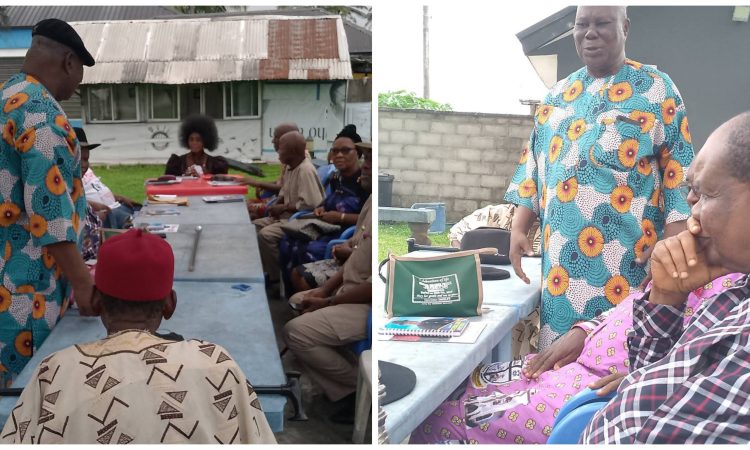
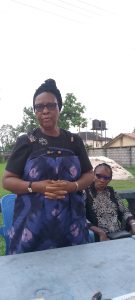
It was unalloyed pleasure for me yesterday to sit among a gathering of veteran journalists—men and women who made their mark as reporters, editors, and columnists in the days of yore at The Nigerian Tide. For those of us from the old Rivers State, Tide was the newspaper of first choice.
In the 1970s, Tide was synonymous with “newspaper.” When you went out to buy a paper, you said you were going to buy Tide. When someone asked, “Did you see yesterday’s Tide?” what they really meant was, “Did you read yesterday’s newspaper?”
My attachment to The Nigerian Tide deepened in August 1977 when it published my name—along with hundreds of other children—on the list of candidates offered admission into secondary schools. Mine was Baptist High School, Port Harcourt. From that moment, I never truly severed my bond with newspapers. Wherever I found them—on rubbish heaps, I picked them up to read; wrapped around akara or suya, I carefully unwrapped them. Printed matter became sacred to me. To this day, I do not toy with it. It harbours the secrets of life.
I remember vividly the 1979 general elections as results trickled in. The Nigerian Tide kept us abreast of developments nationwide. When the controversial Kingsley Ozumba Mbadiwe—the man of Timber and Caterpillar, popularly known as K.O.—lost the Orlu senatorial election, Tide blazed it across the front page: “K.O. Knocked Out!” When Shehu Shagari won the presidential election, the paper proclaimed: “Behold! The President!”
Before handing the paper to my father, a school headmaster, I would first skim through it. He would ask what the news was and then ask me to read it aloud. Sometimes, he would doze off while I was reading. Fathers, indeed, had their fun in those days. I would be left alone with the paper, free to read it to my heart’s content.
My love for the hard copy endured until the digital age gradually took over. As a pre-degree student at the School of Basic Studies, Port Harcourt, I often spent part of my transport money on newspapers and trekked after school to Rumuola Junction.
A newspaper then cost 10 kobo; when Newswatch debuted in January 1985, a copy went for ₦1.50—affordable even for a student. Today, I cannot say the same. That alone speaks volumes about the purchasing power of the average Nigerian.
So when I met the veterans yesterday, I mostly sat back, peering at them with quiet admiration. The occasion was a gathering of old Nigerian Tide hands to condole with the wife of one of their own, Fitzallen Albert-Briggs, who passed on late last year.
As they backslapped, smacked palms, and relived old foibles and pranks, they appeared like rejuvenated youths—men and women in their 70s, and a few in their 80s. The memories of the old-school newsroom came flooding back.
These were journalists who practised at a time when newsrooms had no official cars. They rode motorcycles, trekked long distances, and jumped buses and taxis to cover their beats. One proudly recalled riding a Honda 175 Roadmaster.
The roll call read like a hall of fame: Wofuru Oparaolu, Bobo Brown, Nimi Thom-Manuel, Aluu Longjohn, Dagogo Clinton, Inengisia Somiari, Sunny Okoro, and Soye Young-Itiye. Femi Adejuwon and I—from the Sunray family, of which Briggs was also a part—joined the gathering hosted by Bobo Brown at the Port Harcourt Club.
They remembered their colleagues living and passed. As they reminisced, they mentioned name like Livinus Kiobel, Kwaku Joffa, Nando Gawa, A.A. Amachree, Joe Ayama, Ipalibo Botoye, Dafini Gogo-Abbey, Boma Erekosima, who have transited to the life beyond.
Names like Gloria Fiofori, Kadilo Brown, Julie Jumbo, Linds Somiari, Roland Amaewhule, Maudlin Park, Belshire Belgam, Stanley Ngoa, Reginald Furo, Donald Mike-Jaja, Gladys Kalagbor and many others came up while they chattered away.
At the end of the day, they assured Mrs. Albert-Briggs that they would be there for her. A good summary of the day was a scriptural reference they ascribed to the late Boma Erekosima, “A son of man goeth as it is written of him.” – Matthew 26:24
Indeed, the newsroom is an aphrodisiac. Once it gets into your blood, it never quite lets you go!
Written by Emmanuel Obe from Port-Harcourt, Rivers State
Source: Facebook