

Strait of Hormuz back in operation; Iran open route to friendly nation

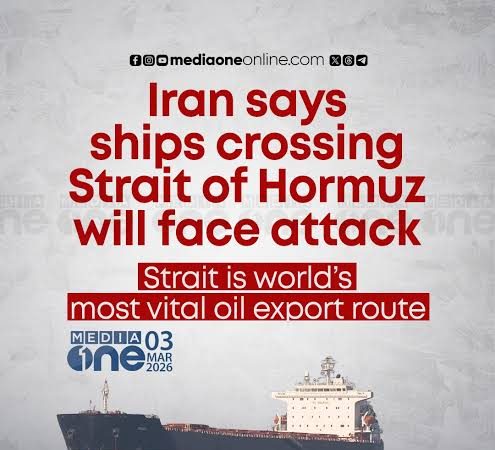
• “The route is open, but closed to our enemies” Foreign minister says
By Lisa Monica, Ramdhani Pratama
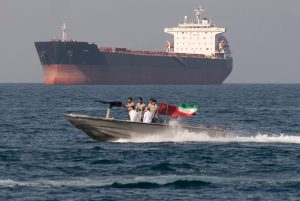
Iran reopens Hormuz; non-Western ships return, rates rise.
JAKARTA – Iran has begun reopening limited access to the Strait of Hormuz by allowing more vessels to pass through, particularly those from countries it considers friendly.
Citing Al Jazeera, data from the maritime intelligence firm; ‘Windward’ shows that eight non‑Iranian ships transited the strait on Monday, 16 March 2026 nearly double the number seen in the previous days.
Tracking service; ‘MarineTraffic’ also recorded an increase in transits over the same period.
Windward analysts say the rise suggests Tehran has granted special permission to certain vessels.
Ships from countries such as China, India and Pakistan are seen as more likely to use the route, while those affiliated with Western nations tend to avoid Iranian waters.
Despite the increase, traffic in the Strait of Hormuz remains extremely limited.
Ship movements have fallen by more than 95 percent since the outbreak of the war involving the United States and Israel against Iran. The strait normally carries around 20 percent of global oil supplies.
The sharp drop in shipping activity has pushed oil prices above US$100 per barrel, more than 40 percent higher than before the conflict.
Iran’s government has sent mixed signals about the status of the Strait of Hormuz. Foreign Minister Abbas Araghchi stated: “The route is open, but closed to our enemies.”
Earlier, the Islamic Revolutionary Guard Corps warned that ships attempting to pass through risk being attacked.
Meanwhile, US President Donald Trump insisted that Washington does not need help from other countries to secure the shipping lane.
He also criticised NATO allies that rejected the proposal to form an international security coalition.
The US military says it has struck Iranian missile facilities near the strait.
According to the US Central Command, the targets were linked to threats against international shipping. (DH/LM)
Credit: IDN Financial
Here is a look at the waterway and its impact on the global economy
• An energy highway in a volatile region
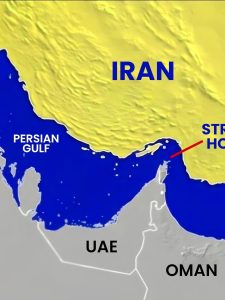
The strait connects the Persian Gulf with the Gulf of Oman and the Arabian Sea. It’s only 33 kilometers (21 miles) wide at its narrowest point, but deep enough and wide enough to handle the world’s largest crude oil tankers.
Oil that passes through the strait comes from Saudi Arabia, the United Arab Emirates, Iraq, Iran, Kuwait, and Bahrain, while major supplies of liquefied natural gas come from Qatar.
At its narrowest point, the sea lanes for tankers lie in Omani waters, and before and after that cross into Iranian territory.
While some global oil chokepoints can be circumvented by taking longer routes that simply add costs, that’s not an option for most of the oil moving through the strait.
That’s because the pipelines that could be used to carry the oil on land, such as Saudi Arabia’s East-West pipeline, they don’t have nearly enough capacity.
“Most volumes that transit the strait have no alternative means of exiting the region,” according to the U.S. Energy Information Administration.
Closing the Strait of Hormuz would send oil prices massively higher; at least at first.
If Iran blocked the strait, oil prices could shoot as high as $120-$130 per barrel, at least temporarily, said Homayoun Falakshahi, head of crude oil analyst at Kpler, in an online webinar Sunday, 15 March, 2026.
That would deal an inflationary shock to the global economy if it lasted. Analysts think it wouldn’t.
Asia would be directly impacted because 84 percent of the oil moving through the strait is headed for Asia; top destinations are China, India, Japan and South Korea.
China gets 47 percent of its seaborne oil from the Gulf. China, however, has an oil inventory of 1.1 billion barrels, or 2 1/2 months of supply.
U.S. oil customers would feel the impact of the higher prices but would not lose much supply. The U.S. imported only about 7 percent of its oil from Persian Gulf countries through the strait in 2024, according to the USEIA. That was the lowest level in nearly 40 years.
Iran has good reasons not to block the strait
Closing the strait would cut off Iran’s own oil exports. While Iran does have a new terminal under construction at Jask, just outside the strait, the new facility has loaded oil only once and isn’t in a position to replace the strait, according to Kpler analysts.
Closure would hit China, Iran’s largest trading partner and only remaining oil customer, and harm its oil-exporting Arab neighbors, who are at least officially supporting it in its war with Israel.
And it would mean blocking Oman’s territorial waters, offending a country that has served as a mediator between the U.S. and Iran.
The US would likely intervene to reopen the strait
Any price spike would probably not last. One big reason: Analysts expect that the U.S. Navy would intervene to keep the strait open.
In the 1980s, U.S. warships escorted Kuwaiti oil tankers through the strait to protect them against Iranian attacks during the Iran-Iraq war.
A price spike “wouldn’t last very long” and the strait would likely be reopened “very fast,” said Kpler’s Falakshahi.
U.S. use of force to reopen the strait would likely be supported by Europe and “even unofficially by China,” he said.
“Iran’s navy would probably get destroyed in a matter of hours or days.”
Additional report – apnews.com